
since 2010
Around Iceland Individual Tour
Return to tour list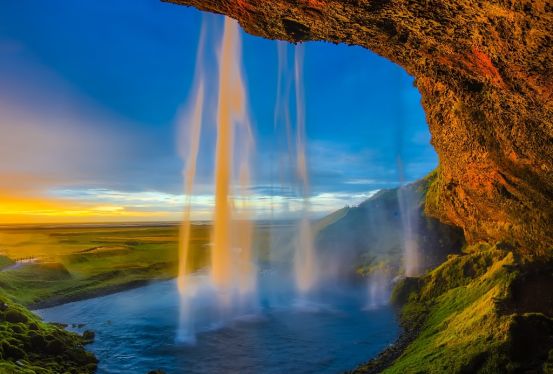
- hotel
- restaurant
- directions_car
May-September
Self-drive tour around Iceland
Day1 Reykjavik
-
Flight to Keflavik airport
-
Car rental at the airport
-
Check-in
-
Pure Lite Pass79 EURPure Pass (with 7 step SPA ritual)102 EURSky Pass (with 7 step SPA ritual and private dressing room)130 EURPackage with SPA ritual and transfers106 EURPremium Sky Pass with transfers131 EUR
Immerse yourself in the warm embrace of water, steam, and the fabled night sky of the arctic summer. Feel yourself unwind with the Ritual, a unique seven-step experience crafted by generations of authentic Icelandic bathing culture.
Day2 Waterfalls, glacier and black sand beaches
-
Breakfast
-
Check-out
-
Drive
-
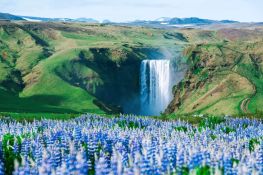
Skógafoss is one of the largest waterfalls in Iceland, boasting a height of approximately 60 meters and a width of 25 meters. You can walk right up to it, but be prepared to get drenched. It's truly overwhelming to stand next to this powerful natural wonder. Due to the substantial amount of mist it generates, you'll often witness beautiful rainbows on sunny days.
-
Walk
-
The 40 metre (131 feet) tall Gljúfrabúi is hidden behind a considerable cliff which faces out towards Iceland’s South Coast and the Atlantic Ocean. Because of its effective ‘hiding place’, Gljúfrabúi is overlooked by most travellers, even though thousands of people visit Seljalandsfoss, less than a kilometre away, every day.
The route into the cavern is mildly challenging and you run the risk of getting wet, so only attempt to reach Gljúfrabúi if you are in a decent state of health and confident on your feet. It should only be attempted when there is no ice on the ground. -
Drive
-
Skógafoss is one of the biggest waterfalls in Iceland, with a drop of some 60 meters and a width of 25 meters, and you can walk right up to, but be prepared to be drenched. It is just overwhelming standing next to it. Seeing that it produces a lot of drizzle then you will be able to see beautiful rainbows on sunny days.
-
Drive
-
Once you are on top in the higher area of Dyrhólaey you will have a breathtaking view to all directions. To the north you see Mýrdalsjökull glacier, to the east you will see the beautiful black lava seastacks Reynisdrangar and to the west you can view the endless black coastline and then in front of the peninsula there is a huge black arch of lava reaching out into the sea which the peninsula takes its name from. Dyrhólaey literally means "the hill island with the door hole". It's 120 m high and you are able to walk the arch or the bridge if you are not afraid of heights. Up there you can also find a spectacular and big "castle shaped" lighthouse.
-
Drive
-
Options
-
Adult136 EURChild 14 - 17 y.o.95 EURDifficulty level: ModerateMax. group size: 8Guiding language: Eng.Leave the crowds behind and immerse in the beauty of a majestic outlet glacier while on a kayak. You will be equipped with a dry suit and shown the basic technique needed to maneuver the kayak. No previous kayaking experience is needed. As you push away from the shore, you will enter a world of iceberg filled lagoon. The spellbinding glacial landscape and calm waters will make you feel like you have been transported into another world. Your guide will lead you around the glacier and in between icebergs to admire these natural wonders from a perspective that can only be seen while on the water. After a period of gliding along the still surface of the lagoon, you’ll head back to shore with a lifetime of memories.
Note: The guide will find out the best solution to divide the kayaks among guests, single or double use. -
shared riding on a vehicle212 EURSingle riding on a vehicle294 EURRiding with an adult (8 - 16 years)153 EURDifficulty level: EasyGuiding language: Eng.
The guide will lead the group to the stunning coastline to witness breathtaking views of the surrounding area. You’ll marvel at the views of Dyrhólaey, a peninsula that is the southernmost tip of the country, and the marvellous Mýrdalsjökull glacier in the distance. After leaving the beach, the group will head to the famous Sólheimasandur plane wreck. This relic has been resting in the sand since 1973. Following the plane, you will drive to the Jökulsá river and up the foot of the mountain.
Please note: A valid driver’s license is required to drive a quad bike.
-
-
Drive
-
With its enormous basalt stacks, roaring Atlantic waves, and stunning panoramas, Reynisfjara is widely considered to be the most beautiful example of Iceland’s black sand beaches.
Reynisdrangar is so amazing that it was featured in Season 7 of the HBO Series Game of Thrones; you can spot it in a few scenes shot ‘North of the Wall’.
The sea stacks themselves are home to thousands of nesting seabirds. Species that can be found here include puffins, fulmars, and guillemots, making it a must-see location for all birdwatchers out there. -
Drive
-
Vik is the southernmost city on the island and one of the few that does not have a port. At the top of the hill stands the main attraction - a white church with a red roof. The church offers a panoramic view of the settlement, the beach and the basalt columns of Reynisdrangar. On the beach there is a statue of the Traveler: a man looking into the distance. It has it`s twin in the port of Hull, UK. The two monuments are facing each other, symbolizing the centuries-old trade alliance between Iceland and the British Kingdom.
-
Drive
-
The canyon was created by the forces of nature about 9,000 years ago, when meltwater made its way through the gorges at the end of the Ice Age. Its greatest depth in some places reaches up to 100 meters. The edges of the steep cliffs on both sides of the river seem to be one big puzzle, as if once a powerful force of nature separated them, filling the gap with the calm Fyadra River.
To see the canyon, you will have to walk uphill.
-
Drive
-
Check-in
Day3 Skaftafell National Park
-
Breakfast
-
Check-out
-
Drive
-
Options
-
Skaftafetl, together with another national park, Vatnajökull, make up the largest protected area in Europe. Sunny weather, atypical for the south of Iceland, is a constant occurrence here. So don't be surprised when you see a tender birch forest and bright colors of heather fields. Even higher above sea level, the landscape changes to a desert of black sand, and then to the Skaftafellsjökull glacier, a volcano and a mountain, lakes with ice and ice caves. The pearl of this park is the Svartifoss waterfall.
-
Adult152 EURChild 10 - 17 y.o.106 EURDifficulty level: ModerateGuiding language: Eng.Max. group size: 15
During this easy Glacier Walk, you will explore a stunning outlet glacier in Skaftafell. This icy giant is a breathtaking outlet glacier that extends from the mighty Vatnajökull, the largest glacier in Europe. Your guide will instruct you on how to use the basic and required glacier equipment that we provide, like crampons and an ice axe. Once you step onto the ice field it will feel as if you have been transported to an icy, foreign planet. As you walk through a wonderland of glacial ice sculptures, ice ridges and deep crevasses on the glacier, you will witness stunning scenery as far as the eye can see.
-
Adult199 EURGuiding language: Eng.
On this unique day tour, we go off the beaten path to explore a beautiful Ice Cave on an outlet glacier near Skaftafell National Park. Getting to the Ice Cave is challenging, but the reward is equally great.
To get to the Ice Cave, we travel over a stunning outlet glacier, navigating through a labyrinth of high glacial ridges, deep crevasses, and other glacial landscape features.
The tour starts at our Skaftafell Base Camp, right on the campsite by the visitor center, where you will meet your expert glacier guide. Then, after being fitted with all necessary gear, crampons, harness, helmet, and an ice axe, we head to the glacier on our glacier bus.
Getting to the Ice Cave is not easy, but the scenery is out of this world. Getting to the Ice Cave can take up to 2 hours, depending on conditions. Traversing the outlet glaciers of Vatnajökull glacier with its beautiful surroundings is a big part of the experience.
*Please note that ice caves are a natural phenomenon and the conditions can change depending on the weather. Your safety is our first priority so sometimes our tours may be canceled with short notice due to weather conditions or safety concerns. If this happens, we will always do our best to offer you an alternative tour, if weather permits.
-
-
Walk
-
Its name is translated from Icelandic as "Black Waterfall". It owes its name to the black basalt columns that frame the water stream like a majestic throne. Geometrically correct, the pillars are like the creations of fantastic creatures. However, scientists have proven that it's all about physical processes. The appearance of the waterfall has inspired architects to create many architectural objects in Iceland with a design in the form of stepped pillars.
The hike from the Visitor Center to the waterfall is 1.5 km uphill. -
Walk
-
Check-in
Day4 Glacial lagoon and east coast
-
Breakfast
-
Check-out
-
Drive
-
Adult99 EURChild 10 - 12 y.o.49 EUR
During the excursion you sail among the huge icebergs in the picturesque scenery of Jökulsárlón. On the Zodiac we are able to cover large areas of the lagoon and get closer to the icebergs than on the amphibian. When possible the Zodiac goes almost all the way up to the glacier (as close as safe).
-
Jökulsárlón Glacier Lagoon is a natural wonder of our world formed by the constant melting and breaking of the glacier.
The lake has grown at varying rates because of glacial melting. It is now 1.5 kilometres away from the ocean’s edge and covers an area of about 18 km2. It recently became the deepest lake in Iceland, at over 248 metres (814 feet), as glacial retreat extended its boundaries. The Glacial Lagoon is part of Vatnajokull National Park. -
Drive
-
Diamond Beach is a black sand beach located just beyond the bridge from the Jokulsarlon Glacier Lagoon. The ice pieces are the remnants of the large icebergs from the lagoon. The ice really sparkles in the sun, just like diamonds. They stand out so well in contrast to the black sand. You can find some really large chunks, along with lots of smaller ones. You can walk around them and take some awesome pictures.
Prepare to be amazed at the most popular beach in Iceland! -
Drive
-
In reality, it is a film set for an Icelandic movie that was never filmed, but you’d definitely be forgiven for mistaking it for the real thing. Built in 2010, the set is located on the land of a local farmer.
The most striking feature of the village is the buildings, which ape the architecture of the period magnificently. Guests can pry open the wooden doors and find themselves within a range of rooms that look almost indistinguishable from the real thing. But this is not the only piece of period detail; the settlement also comes equipped with a dungeon located beneath an enormous artificial boulder. -
Walk
-
Vestrahorn, on the Stokksnes peninsula in Southeast Iceland, is one of the country’s most breathtaking mountains. With peaks reaching up to 454 metres (1490 ft), steep cliffs rising from the sides of a stunning lagoon, and black sand beaches all around, it promises to blow away anyone with an appreciation of stark natural beauty.
The Stokksnes peninsula also has an interesting history stretching back to the 9th Century, with Horn being one of the country’s first settlements; it was also a vital location of the British army during World War Two.
It's a great place to experience the isolated, quiet, beautiful charm of this island. Be aware, however, that the beach at Stokksnes is private, and has a small entrance fee, which allows the landowner to keep up the maintenance of the road. -
Drive
-
This fishing village is located at the foot of the basalt pyramid mountain Bulandstindur. It is famous throughout Iceland for its stunning, almost sculptural beauty. According to local folklore, the mountain can grant wishes during the summer solstice and is the "energy center" for the entire country. Along the waterfront is a piece of art called "The Egg of Pleasant Bay," which is a replica of the eggs of 32 species of birds that nest in the area. This diversity of birds has become a tourist attraction in Djúpivogur and Papey Island.
-
The region with the sunniest weather and 120 km of coastline. It is the only place in the country where wild deer live.
The main city of the region is Eielsstadir. The highest free-standing peak in Iceland, Mount Snafell, is located here, in the country's largest forest. It is located right on the eastern shore of Lake Lagarfjöllöt. Look closely at it, you may see a monster snake, the main character of local legends. Not far from the lake is the third highest waterfall in Iceland, the beautiful Hengifoss. -
Drive
-
Check-in
-
Drive
-
A large city in the east of Iceland, located in a fertile valley. Not far from the city are two pearls of the country: the largest forest and a mysterious lake.
The forest covers 740 hectares and consists of more than 80 species of trees from all over the world. As for the lake, there are many reports that a monster snake lives in it. According to the legend, it is Lagarfleiótsormur, a cousin of the Loch Ness Monster. The Lagarfleut has been spoken of since 1345, which is 500 years earlier than Nessie, and the snake is still seen to this day.
-
Hengifoss waterfall stands at approximately 128 meters, ranking as the second-highest waterfall in Iceland, excluding those within the Morsárjökull glacier. Surrounded by distinctive basaltic strata, it features interposed layers of red clay. Geologists have uncovered fossilized trees within the strata, indicating warmer periods during the tertiary period. Downstream from Hengifoss, along the Hengifossá river, lies Litlanesfoss, a smaller waterfall encountered on the hike from the parking lot to Hengifoss. The river eventually flows into the legendary Lake Lagarfljót, known for the mythical sea wyrm Lagarfljótsormur.
-
Drive
Day5 Nothern Iceland
-
Breakfast
-
Check-out
-
Drive
-
Walk
-
A canyon with the largest number of basalt columns in Iceland and a stunning blue glacial river. It was created when once very powerful, glacial river made its way from the highlands to the north of the country. With the construction of a nearby hydroelectric power plant, the local landscape changed dramatically. When the river flows calmed down and the water level dropped, a stunningly beautiful canyon emerged.
-
You can hear it much earlier before you see it. And no wonder - it is the largest waterfall in Europe in terms of the average volume of water that the waterfall drops per second, with a height of 45 meters and a width of 100 meters. The water is almost always dark due to mineral deposits, and during floods, the river and its three waterfalls often get almost black from volcanic minerals.
-
Walk
-
This waterfall is spread out on the lava stones of the canyon for a width of about 100 meters, and its height is relatively low - only 11 meters. It draws its power from the second largest river in Iceland, which flows through the Vatnajökull glacier. Although the water flow decreases in winter, Selfoss is very full all year round. Unfortunately, it is often missed on its way downstream to the most powerful waterfall in Europe, Dettifoss.
-
Walk
-
Drive
-
Downstream of Dettifoss, the most powerful waterfall in Europe, is another large waterfall, the thunderous Hafragilsfoss. Like Dettifoss, it is part of the glacial river Jökulsa-a-Fjöttlum in Northern Iceland. Hafragilsfoss descends 27 meters into a canyon cut by a powerful river flow.
-
Drive
-
This striking valley shaped like a horseshoe is said to be the footprint of the Norse god Odin's horse, according to an old legend. The dense forests of willow and birch create a unique landscape here, unmatched by anything else in Iceland. The canyon contains Eyján ("Island"), a 25-meter-tall rock formation that splits Asbirgi for nearly half of its length, and Botnstjörn, a small lake.
-
Drive
-
Situated on the periphery of Skjálfandi Bay, the town of Húsavík is widely acknowledged as one of the world's top spots for whale watching. Húsavík offers the best chance of seeing whales anywhere in Iceland. In the previous year, whales were observed on 98% of whale-watching excursions.
Because of the various whale species that migrate through Husavik's bay, the town got its name. Apart from them, this city has an intriguing two-story whale museum and an old wooden church that is worth seeing. Don't forget to immerse yourself in Geosea's distinctive and healing sea baths.
-
Drive
-
Located in the northeast of the country, Godafoss, also known as the "Waterfall of the Gods," is one of Iceland's most famous natural treasures. It is an essential component of Skjalfandafljot, Iceland's fourth-largest river, and is rich in both beauty and history. Godafoss tumbles over a curved edge that is about thirty meters (30 feet) wide and descends 39 feet (12 meters) into a calm and scenic pool.
-
Drive
-
Check-in
-
The city is located on the longest fjord in Iceland, Eyjafjordur, where you can watch dolphins and seals all year round. Sometimes you can see killer whales, blue whales, and fin whales, which are not frequent visitors here anymore.
In the city, you should visit the Lutheran Church on the hill, known for its stained glass windows, and the best botanical garden in Iceland. The Hof Cultural Center building is also worth your attention, as it hosts music and theater performances and various exhibitions.
Day6 Northern Iceland and Lake Mývatn
-
Breakfast
-
Check-out
-
Adult103 EURChild 7 - 15 y.o.51 EURPrivate tour3 006 EURGuiding language: Eng.
Here is your chance to see the incredible Eyjafjord Humpbacks in their natural habitat. The warmth of the summer sun brings vibrant life and plentitude of food to the fjord and following it, in a feeding frenzy, come the larger-than-life Humpbacks. Our specially trained whale watching guides are experts at spotting them and telling you all about their behaviour, any question you have, we promise you an answer.
Our ship is the only high speed, specially modified, whale watching ship in Iceland. Capable of carrying 200 persons with spectacular views from our “cinema styled” viewing platforms. Its speed guarantees availability of whale watching tours from Akureyri, where ever the whales might be located in the deepest fjord in Iceland. With ample indoor and outdoor seating, bar and cafeteria, you can be sure that the ride is comfortable and pleasant even at speed.
-
Drive
-
Enormous sulfur springs and geothermal mud, lunar-scale volcanic craters, recently formed lava fields, and verdant shallows brimming with birds are just a few of the breathtaking sights and delicate landscapes of the remarkable Lake Myvatn region, which is among the nation's most geologically active areas. Lava overflowed the wetlands during volcanic eruptions, creating the lake's pseudo-craters. These magnificent formations were sculpted out of the earth by explosions brought on by the cold water meeting the boiling lava.
-
Drive
-
Once upon a time, as a result of a volcanic eruption, a huge lava pool was formed here. Heading toward Lake Mývatn, it was exhausted and froze, leaving behind these strange caves, pillars and towers of lava that resemble the remains of a medieval castle ruin. In Icelandic folklore, this valley is the gateway to hell. In Nordic Christian legends, it is the place where Satan landed after being expelled from heaven and created the "Catacombs of Hell".
-
Drive
-
Hverfjall is a beautifully crater formed 2,500 years ago. It is about 1 km in diameter and 140 meters deep. The round shape of the crater is broken by a landslide that occurred in its southern part during the eruption. Craters of the same type as Hverfjall are quite rare in the world. If you are going to visit it on your own, keep in mind that the crater rim can be reached only by two trails, which are marked with signs, and it is strictly forbidden to climb or descend by other routes.
-
Drive
-
It used to be a great place for swimming, but due to the great volcanic activity, the water temperature has risen and now it is very hot there. Romantic scenes from Game of Thrones with Jon Snow and Ygritte were filmed in the cave.
-
Drive
-
Due to the high acidity caused by the geothermal processes of the neighboring Krapla volcano, there is little vegetation in the Naumaskard Valley. But it is unexpectedly colorful: mineral deposits in the mud fields and rocks have painted the valley in bright colors of the rainbow. In the geothermal zone of Hverir itself, there are many steaming mineral formations and boiling mud cauldrons surrounded by sulfur crystals of different colors.
-
Drive
-
Adult46 EURChild 13 - 15 y.o.23 EURPensioners, students and people with disabilities30 EURTowel6 EURMinimum age: 10.00-23.00
The Mývatn Natural Baths are a set of geothermal pools and steam baths located in the Lake Mývatn area. Opened in 2004, Mývatn Natural Baths is the northern spa of southwestern Iceland's world-famous Blue Lagoon Spa. It is the only swimming pool of this size in the area and is growing in popularity.
The Myvatn natural baths are built around a large lagoon and have a temperature of approximately 36 to 40 degrees Celsius (97 to 104 degrees Fahrenheit). The water here is rich in minerals, especially sulfur, which is said to be good for respiratory and skin problems. There are also two steam chambers located directly above the bubbling geothermal water. The temperature there is about 50 degrees Celsius (122 degrees Fahrenheit) and the humidity is about 100 percent. There is also a hot tub, separate children's pool and restaurant on site.
-
Drive
-
Check-in
Day7 Western Iceland
-
Breakfast
-
Check-out
-
Drive
-
Local legend has it that Hvítserkur was originally a troll from the peninsula who decided to tear the bells off the Tingeyraklaustur monastery. He was so angry and persistent that he didn't notice the sunrise and instantly petrified in its rays.
In reality, it is a 15-meter-high basalt rock that protrudes from the bay. It is a nesting place for seagulls and cormorants, which create constant movement around it, further reinforcing the idea that Hvitserkur is in some way very much alive. -
Drive
-
Within the valley of Víðidalur, there is a gorge known as Kolugljúfur or Kolugil in the great salmon river Víðidalsá. The Kolugljúfur canyon is only a short stroll from the main road, so you won't even need to worry about making additional travel arrangements to get there. It is one kilometer long and 40–50 meters deep. There is a collection of seven or eight small waterfalls called Kolufoss waterfall. When traveling to the northern region of the country, this is a place that one should not miss. Stopping here will be worthwhile due to the breathtaking view, and you will undoubtedly take some amazing Instagram-worthy photos in this area with its green and brown surroundings surrounding the frothy white waters of the gorge.
-
Drive
-
Reachable via a footpath, the Grabrok Crater is situated approximately 170 meters (558 feet) above the ground. Although the hike can be challenging due to its steepness, there are steps built on part of it.
Grabrok is a part of the volcanic system Ljosufjoll. It extends all the way from the Berserker lava field in the northern Snaefellsnes peninsula, across the actual Ljosufjoll mountains. One of Iceland's longest volcanic systems, it stretches 90 km (56 miles) in total. This volcanic system had its most recent eruption roughly a millennium ago.
-
Drive
-
The mountain-church was named after its shape, which resembles the dome of a church. The perfect proportions made it the most photogenic mountain in Iceland. And in most cases, photographers try to capture both the small Kirkjufell waterfall and the beauty herself in the camera lens.
-
Drive
-
The small fishing town of Arnarstapi was once a bustling port and trading center serving the West Coast. Today, it is still a busy harbor in the summer months, serving private small fishing and cruise ships. Near the town there is a trail along the rocky shore, at the beginning of which you will be greeted by a stone giant, Bardur, a half-troll, half-man. After passing him, the path will lead to an unusual rock called Gatkletur, which translates as "a rock with a hole in it."
-
Adult32 EUR
Vatnskellir (from the Icelandic water cave), 200 meters long, was opened in 2011. It has 2 galleries with lava formations, which are connected by a narrow spiral staircase. Further, on the coast, other basalt formations, the Londrangar rocks, rise from the sea to a height of 61 and 75 meters. They are closely circled by birds, and among them you can find dead ends!
It's hard to believe that in the past, and even now, farmers do not use the pastures near the rocks, as they are believed to belong to the elves who live there.
-
It is a turbulent bay with dark rocks and black sand on the Snaefellsnes peninsula. It was once a thriving fishing village when the peninsula was one of the most active trading posts. The shiny pebbles of the beach attract the attention of pebble collectors, but they are protected by law and should not be taken from the beach.
In 1948, the English trawler Epine GY 7 from Grimsby was shipwrecked off this coast. The remains of the rusty iron from the ship are scattered on the shore and are protected as a monument to the dead. -
Drive
-
Check-in
-
Car return at the airport
Day8 Colored mountains of Landmannalaugar
-
Breakfast
-
Options
-
Adult350 EURAn excursion to the colorful mountains and hills, the relief of which was formed under the influence of water and lava. Under different light conditions and weather, the rocks and sand appear yellow, red-brown with splashes of green, purple and blue. During a 3-hour hike in the mountains, you can hardly see anything worthy of a photo. There are also thermal springs that wrap the hills in a haze of vapor, which gives the landscape even more incredible shapes. The temperature of the springs is suitable for swimming in their healing waters.
-
місце в автобусі в обидва боки434 EURGuiding language: no guideThis is a self-guided trip to the most beautiful national park in Iceland, to the colorful mountains and hills, the relief of which was formed by water and lava. You will have 5.5 hours to walk on your own along marked routes through lava fields and hills and mountains. There are also thermal springs that wrap the hills in a haze of vapor, which gives the landscape even more incredible shapes. There is an equipped place where the temperature of the springs is suitable for swimming. There are no closed changing rooms, but the bath is free.
-
Day9 Reykjavik
-
Breakfast
-
Private Transfer
-
Comfort package, from92 EURPremium package, from110 EURLuxury Package: SPA Retreat, from280 EURGroup transfer from Rekjavik and back51 EURIndividual transfer from Rekjavik and back for 1-6 people471 EUR
Iceland can offer its visitors not only the beauty of nature, but also its healing power. To experience it, we suggest visiting the Blue Lagoon, a unique geothermal spring in the middle of a black lava field, which is known not only for its milky blue mineral waters but also for its spa treatments. National Geographic rated it as one of the 25 Wonders of the World.
The cost is dynamic and depends on the time of entry to the spa complex and the number of available slots.
Comfort Package:
-- towel
-- wellness mask
--1 drink of your choicePremium package:
everything in the Comtort package
+ two additional wellness masks to choose from
+ bathrobe
+ a glass of sparkling wine during lunch at Lava restaurantSuite package (SPA Retreat):
everything in the Comtort package
+ Lagoon retreat
+ private room for changing clothes
+ additional rooms for relaxation
+ scrubs and creams
+ the option to order massages and treatments -
Flight
- hotel
- restaurant
- directions_bus
- record_voice_over
- hotel
- restaurant
- directions_car
-450x300.jpg)