
since 2010
Around Iceland in a small group (August)
Return to tour list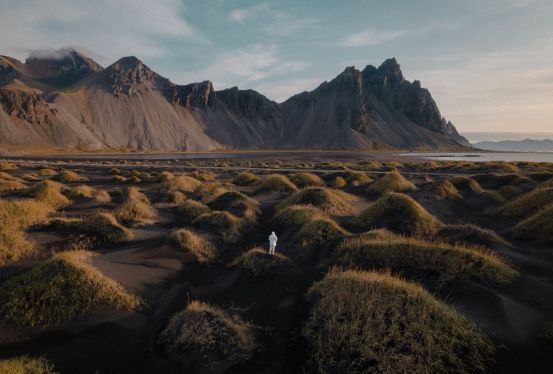
- hotel
- restaurant
- directions_bus
- record_voice_over
- terrain
Around Iceland in a small group (August) 2025
Day1 Rekjavik
-
Flight
-
Private Transfer
-
Check-in
-
Number of stars:Guest rating: 8.5Цей стильний та оригінальний готель розташований лише за 2 хвилини ходьби від головної торгової вулиці Рейк'явіка, Лаугавегур. До послуг гостей безкоштовний Wi-Fi та номери з телевізором із супутниковими каналами та усім необхідним для приготування чаю/кави.
Індивідуально оформлені номери готелю Thingholt by Center Hotels оснащені міні-баром, сучасними ванними кімнатами та халатами.
У фойє є безкоштовний комп'ютер з доступом до Інтернету. У ресторані готелю Ísafold подають страви ісландської та інтернаціональної кухні. У барі з сучасним освітленням і модною атмосферою можна насолодитися коктейлями та компанією.
Day2 Golden ring
-
Breakfast
-
Check-out
-
Although the Great Geysir is less active these days, it did lend its name to hot springs all over the world. It was the first geyser described in a printed source.
-
Gullfoss (translated to ‘Golden Falls’) is one of Iceland’s most iconic and beloved waterfalls, found in the Hvítá river canyon in Southwest Iceland. In sunny weather, regardless of the season, an incredibly beautiful rainbow stands above it.
-
Skógafoss is one of the largest waterfalls in Iceland, boasting a height of approximately 60 meters and a width of 25 meters. You can walk right up to it, but be prepared to get drenched. It's truly overwhelming to stand next to this powerful natural wonder. Due to the substantial amount of mist it generates, you'll often witness beautiful rainbows on sunny days.
-
Skógafoss is one of the biggest waterfalls in Iceland, with a drop of some 60 meters and a width of 25 meters, and you can walk right up to, but be prepared to be drenched. It is just overwhelming standing next to it. Seeing that it produces a lot of drizzle then you will be able to see beautiful rainbows on sunny days.
-
Number of stars:Guest rating: 8.5Цей готель розташований на фермі. До послуг гостей лаунж із телевізором, а також традиційні страви ісландської кухні в ресторані.
Номери готелю Búrfell оформлені у світлих тонах. Усі номери облаштовані власними ванними кімнатами. З деяких номерів відкривається вид на льодовик Ейяфьятла та Атлантичний океан.
Day3 South coast and glaciers
-
Breakfast
-
Check-out
-
With its enormous basalt stacks, roaring Atlantic waves, and stunning panoramas, Reynisfjara is widely considered to be the most beautiful example of Iceland’s black sand beaches.
Reynisdrangar is so amazing that it was featured in Season 7 of the HBO Series Game of Thrones; you can spot it in a few scenes shot ‘North of the Wall’.
The sea stacks themselves are home to thousands of nesting seabirds. Species that can be found here include puffins, fulmars, and guillemots, making it a must-see location for all birdwatchers out there. -
Don't pass up the chance to witness Yoda in all his glory! The Yoda Cave in Iceland is unmistakably shaped like the iconic character. While some might dismiss it as a tourist attraction, stepping inside reveals an uncanny resemblance to Yoda, especially when viewed from a certain angle. On a clear day with blue skies, the experience becomes even more awe-inspiring.
-
The canyon was created by the forces of nature about 9,000 years ago, when meltwater made its way through the gorges at the end of the Ice Age. Its greatest depth in some places reaches up to 100 meters. The edges of the steep cliffs on both sides of the river seem to be one big puzzle, as if once a powerful force of nature separated them, filling the gap with the calm Fyadra River.
To see the canyon, you will have to walk uphill.
-
Jökulsárlón Glacier Lagoon is a natural wonder of our world formed by the constant melting and breaking of the glacier.
The lake has grown at varying rates because of glacial melting. It is now 1.5 kilometres away from the ocean’s edge and covers an area of about 18 km2. It recently became the deepest lake in Iceland, at over 248 metres (814 feet), as glacial retreat extended its boundaries. The Glacial Lagoon is part of Vatnajokull National Park. -
Diamond Beach is a black sand beach located just beyond the bridge from the Jokulsarlon Glacier Lagoon. The ice pieces are the remnants of the large icebergs from the lagoon. The ice really sparkles in the sun, just like diamonds. They stand out so well in contrast to the black sand. You can find some really large chunks, along with lots of smaller ones. You can walk around them and take some awesome pictures.
Prepare to be amazed at the most popular beach in Iceland! -
Number of stars:Guest rating: 8З готелю Fosshotel Vatnajokull відкривається вид на найбільший в Європі льодовик Ватнайокюдль. До послуг гостей номери з опаленням, супутниковим телебаченням та окремими ванними кімнатами з душем. Відстань до аеропорту Хофн становить 5 км.
Страви подаються у власному ресторані з панорамним видом. Напої можна замовити в барі.
Day4 Eastern fjords
-
Breakfast
-
Vestrahorn, on the Stokksnes peninsula in Southeast Iceland, is one of the country’s most breathtaking mountains. With peaks reaching up to 454 metres (1490 ft), steep cliffs rising from the sides of a stunning lagoon, and black sand beaches all around, it promises to blow away anyone with an appreciation of stark natural beauty.
The Stokksnes peninsula also has an interesting history stretching back to the 9th Century, with Horn being one of the country’s first settlements; it was also a vital location of the British army during World War Two.
It's a great place to experience the isolated, quiet, beautiful charm of this island. Be aware, however, that the beach at Stokksnes is private, and has a small entrance fee, which allows the landowner to keep up the maintenance of the road. -
This fishing village is located at the foot of the basalt pyramid mountain Bulandstindur. It is famous throughout Iceland for its stunning, almost sculptural beauty. According to local folklore, the mountain can grant wishes during the summer solstice and is the "energy center" for the entire country. Along the waterfront is a piece of art called "The Egg of Pleasant Bay," which is a replica of the eggs of 32 species of birds that nest in the area. This diversity of birds has become a tourist attraction in Djúpivogur and Papey Island.
-
A large city in the east of Iceland, located in a fertile valley. Not far from the city are two pearls of the country: the largest forest and a mysterious lake.
The forest covers 740 hectares and consists of more than 80 species of trees from all over the world. As for the lake, there are many reports that a monster snake lives in it. According to the legend, it is Lagarfleiótsormur, a cousin of the Loch Ness Monster. The Lagarfleut has been spoken of since 1345, which is 500 years earlier than Nessie, and the snake is still seen to this day.
-
Hengifoss waterfall stands at approximately 128 meters, ranking as the second-highest waterfall in Iceland, excluding those within the Morsárjökull glacier. Surrounded by distinctive basaltic strata, it features interposed layers of red clay. Geologists have uncovered fossilized trees within the strata, indicating warmer periods during the tertiary period. Downstream from Hengifoss, along the Hengifossá river, lies Litlanesfoss, a smaller waterfall encountered on the hike from the parking lot to Hengifoss. The river eventually flows into the legendary Lake Lagarfljót, known for the mythical sea wyrm Lagarfljótsormur.
-
Цей гостьовий будинок розташований в оточенні природи, за 10 хвилин їзди від Егілсстадіра та річки Лагарфльот. Гості можуть користуватися спільним лаунжем і постійно отримувати безкоштовні гарячі напої.
Номери гостьового будинку Eyjólfsstadir оформлені в сучасному строгому стилі. Гості мають доступ до 4 спільних душових та 7 спільних туалетів.
Day5 Northern Iceland
-
You can hear it much earlier before you see it. And no wonder - it is the largest waterfall in Europe in terms of the average volume of water that the waterfall drops per second, with a height of 45 meters and a width of 100 meters. The water is almost always dark due to mineral deposits, and during floods, the river and its three waterfalls often get almost black from volcanic minerals.
-
Due to the high acidity caused by the geothermal processes of the neighboring Krapla volcano, there is little vegetation in the Naumaskard Valley. But it is unexpectedly colorful: mineral deposits in the mud fields and rocks have painted the valley in bright colors of the rainbow. In the geothermal zone of Hverir itself, there are many steaming mineral formations and boiling mud cauldrons surrounded by sulfur crystals of different colors.
-
Minimum age: 10.00-23.00
The Mývatn Natural Baths are a set of geothermal pools and steam baths located in the Lake Mývatn area. Opened in 2004, Mývatn Natural Baths is the northern spa of southwestern Iceland's world-famous Blue Lagoon Spa. It is the only swimming pool of this size in the area and is growing in popularity.
The Myvatn natural baths are built around a large lagoon and have a temperature of approximately 36 to 40 degrees Celsius (97 to 104 degrees Fahrenheit). The water here is rich in minerals, especially sulfur, which is said to be good for respiratory and skin problems. There are also two steam chambers located directly above the bubbling geothermal water. The temperature there is about 50 degrees Celsius (122 degrees Fahrenheit) and the humidity is about 100 percent. There is also a hot tub, separate children's pool and restaurant on site.
-
Enormous sulfur springs and geothermal mud, lunar-scale volcanic craters, recently formed lava fields, and verdant shallows brimming with birds are just a few of the breathtaking sights and delicate landscapes of the remarkable Lake Myvatn region, which is among the nation's most geologically active areas. Lava overflowed the wetlands during volcanic eruptions, creating the lake's pseudo-craters. These magnificent formations were sculpted out of the earth by explosions brought on by the cold water meeting the boiling lava.
-
Located in the northeast of the country, Godafoss, also known as the "Waterfall of the Gods," is one of Iceland's most famous natural treasures. It is an essential component of Skjalfandafljot, Iceland's fourth-largest river, and is rich in both beauty and history. Godafoss tumbles over a curved edge that is about thirty meters (30 feet) wide and descends 39 feet (12 meters) into a calm and scenic pool.
-
Помешкання Acco Guesthouse розміщено в місті Акурейрі. За 35 км звідси можна оглянути пам'ятку "Водоспад Годафосс", а за 14 хв. ходьби – пам'ятку "Hof - Cultural Center and Conference Hall". Гостям надаються такі послуги/зручності: спільна кухня і спільний лаунж, а також безкоштовний Wi-Fi на всій території помешкання. У помешканні Acco Guesthouse номери оснащені постільною білизною та рушниками.
Day6 Northern Iceland and whales
-
Breakfast
-
The city is located on the longest fjord in Iceland, Eyjafjordur, where you can watch dolphins and seals all year round. Sometimes you can see killer whales, blue whales, and fin whales, which are not frequent visitors here anymore.
In the city, you should visit the Lutheran Church on the hill, known for its stained glass windows, and the best botanical garden in Iceland. The Hof Cultural Center building is also worth your attention, as it hosts music and theater performances and various exhibitions.
-
Adult or child224 EURMax. group size: 12Guiding language: Eng.
The humpback whale and puffin migration routes pass through the Eyjafjordur Fjord. There's also a chance to spot killer whales, white-finned dolphins, blue whales, and fin whales here, surrounded by mountains. Because of its abundance of life, Akureyri is among the greatest locations in the world to see whales. You will have the opportunity to see a variety of bird species during the tour, the most well-known of which being the Atlantic puffin.
Whale watching is more likely to occur on this tour than it is close to Reykjavik.
Not appropriate for kids younger than ten years old.
-
In the late 19th and early 20th centuries, Siglufjörður thrived as a hub for fishing and fish processing, kickstarted by Norwegian entrepreneurs venturing into shark-catching. Recognizing the abundance of herring, they established a herring venture, transforming Siglufjörður into its primary operation center and marking the town's prosperous history. As factories for herring-meal production flourished in the early 20th century, Siglufjörður became a thriving Klondike town, experiencing a population boom in the '30s and '40s.
The town's proximity to rich fishing grounds teeming with cod, halibut, and herring has been advantageous for centuries. -
Opening hours: June, July & August: 10:00-18:00 May & September: 13:00-17:00In Iceland, herring is often called the "silver of the sea". In its heyday, the tiny town of Siglufjördur was the heart of the industry. The Herring Era Museum is presented in three exhibitions located in three buildings down by the beautiful harbor.
The museum brings the harbor atmosphere of the 1950s to life, including dancing and singing on sunny days. The third exhibition demonstrates the process of salting as it was done in the old days. This award-winning museum is well worth your time, and the ticket price also includes the Ura Museum and the Folk Music Center. -
Minimum age: Monday - Friday 07:00–13:00 17:00–20:00 Saturday 11:00–16:00 Sunday 11:00–16:00
Public pool with water temperature of 31°C and a 38°C hot tub. The pool offers breathtaking views of the fjord, whales and rugged mountains in the distance
-
Constructed in the late 17th century, Grafarkirkja is Iceland's oldest Christian church, celebrated for its unique ornamentation, a rarity among turf churches. Crafted by the skilled wood carver Guðmundur Guðmundsson, the church boasts Baroque design patterns on support rafters and distinctive carvings on the altar, distinguishing it from the more austere structures of its time. Despite being deconsecrated shortly after its completion and repurposed as a tool shed, Grafarkirkja was faithfully reconstructed by the National Museum of Iceland in 1950, allowing modern visitors to marvel at its historical and architectural significance.
-
Number of stars:Guest rating: 9.2Помешкання Stóra-Ásgeirsá розташовано в місті Víðigerði. До послуг гостей номери з видом на річку, а також до послуг гостей сад, тераса і бар. На території помешкання до розпорядження гостей приватна парковка, а також доступний безкоштовний Wi-Fi. Гостям пропонують варіанти розміщення з патіо та телевізором із плоским екраном. На кухні також є холодильник, мікрохвильова піч та плита, у тому числі чайник. До послуг гостей Stóra-Ásgeirsá гідромасажна ванна.
Day7 Western Iceland
-
Breakfast
-
Within the valley of Víðidalur, there is a gorge known as Kolugljúfur or Kolugil in the great salmon river Víðidalsá. The Kolugljúfur canyon is only a short stroll from the main road, so you won't even need to worry about making additional travel arrangements to get there. It is one kilometer long and 40–50 meters deep. There is a collection of seven or eight small waterfalls called Kolufoss waterfall. When traveling to the northern region of the country, this is a place that one should not miss. Stopping here will be worthwhile due to the breathtaking view, and you will undoubtedly take some amazing Instagram-worthy photos in this area with its green and brown surroundings surrounding the frothy white waters of the gorge.
-
Reachable via a footpath, the Grabrok Crater is situated approximately 170 meters (558 feet) above the ground. Although the hike can be challenging due to its steepness, there are steps built on part of it.
Grabrok is a part of the volcanic system Ljosufjoll. It extends all the way from the Berserker lava field in the northern Snaefellsnes peninsula, across the actual Ljosufjoll mountains. One of Iceland's longest volcanic systems, it stretches 90 km (56 miles) in total. This volcanic system had its most recent eruption roughly a millennium ago.
-
Borgarnes was founded more than 1,000 years ago. This fishing village remained small until the 20th century. But with the construction of infrastructure facilities, a road to the north of the country and the Snaefedlsnes peninsula was built through Borgarnes. Until the 90s, travelers had to make a detour around the Whale Fjord to get here from the capital. But this problem was solved with the help of a tunnel. Now the trip passes through the second-longest bridge in Iceland and a six-kilometer-long tunnel under the fjord.
-
Glanni is a stunning waterfall on the Nordura River. Locals believe it to be the home of elves and trolls. There is a well-marked and marked trail leading to the waterfall.
Glanni is close to the Graubrock volcano, the Grabrokarhraun lava field, and the small village of Bifrost. Not far away is Paradisarlaut (Paradise Hollow), a beautiful oasis in the middle of a lava field. The waterfall is small but beautiful, with at least three neighboring waterfalls, each with several tiers.
The Nordura River is one of the richest salmon rivers in Iceland. Therefore, it is not uncommon to see salmon jumping into the waterfall through man-made steps to facilitate their journey. -
Number of stars:Guest rating: 8.1Цей готель розташований недалеко від Лаугавегур, головної торгової вулиці Рейк'явіка, і пропонує номери з безкоштовним дротовим доступом до Інтернету, супутниковим телебаченням та міні-баром. Кілька закладів харчування та нічних клубів знаходяться за декілька хвилин ходьби.
Усі номери готелю Center Klopp мають дерев'яну підлогу та сучасний декор у скандинавському стилі. Також до послуг гостей кавоварка/чайник. З багатьох номерів відкривається вражаючий вид на затоку та довколишні гори.
Сніданок «шведський стіл» подається на стійці реєстрації готелю.
Day8 Rekjavik
-
Breakfast
-
Check-out
-
Not sure what to do in this city? Here are a few tips: walk along the city's colorful streets, there is a lot of stunning graffiti on the walls of houses, so you will see modern artistic masterpieces while walking. The city has many unique and interesting museums worth visiting. The main promenade of the city is full of a variety of restaurants and shops, and the famous monument "Sun Traveler" is also located there. The most wonderful photos with it are taken in the evening when the sun goes down into the sea. Check it out for yourself!
-
Adult 16+28 EURChild 7 - 15 y.o.14 EURChild 1 - 6 y.o.FreeOpening hours: 10:00 - 17:00The Whales of Iceland museum is located on Grandi, right next to the Reykjavík harbour, making it ideal for people who want to learn about whales before going on a whale-watching trip, although it is interesting enough to be visited in and of itself. There you will find life-size models of the 23 whale species that have been found in Iceland's waters, alongside various interactive exhibits that make it perfect for people of all ages.
-
Private Transfer
-
Comfort package, from92 EURPremium package, from113 EURLuxury Package: SPA Retreat, from351 EURGroup transfer from Rekjavik and back51 EURPrivate transfer from Rekjavik and back for 1-6 people471 EURПакет комфорт з групою на 17 серпня 14.00103 EUR
Iceland can offer its visitors not only the beauty of nature, but also its healing power. To experience it, we suggest visiting the Blue Lagoon, a unique geothermal spring in the middle of a black lava field, which is known not only for its milky blue mineral waters but also for its spa treatments. National Geographic rated it as one of the 25 Wonders of the World.
The cost is dynamic and depends on the time of entry to the spa complex and the number of available slots.
Comfort Package:
-- towel
-- wellness mask
--1 drink of your choicePremium package:
everything in the Comtort package
+ two additional wellness masks to choose from
+ bathrobe
+ a glass of sparkling wine during lunch at Lava restaurantSuite package (SPA Retreat):
everything in the Comtort package
+ Lagoon retreat
+ private room for changing clothes
+ additional rooms for relaxation
+ scrubs and creams
+ the option to order massages and treatments -
Flight
-263x175.jpg)
- hotel
- restaurant
- directions_bus
- directions_boat
- record_voice_over
- terrain
- hot_tub
 (1) (1)-1152x768-263x175.jpg)
- hotel
- restaurant
- directions_bus
- directions_boat
- record_voice_over
- terrain
- hot_tub
- hotel
- restaurant
- directions_bus
- record_voice_over
- terrain