
since 2010
South of Iceland in a small group (August)
Return to tour list-553x374.jpg)
- hotel
- restaurant
- directions_bus
- directions_boat
- record_voice_over
- terrain
- hot_tub
South of Iceland in a small group (August)
Due to the fact that the tour is conducted in a mini-group, we will be more mobile: less waiting, more drive and incredible Icelandic nature!
Day1 Rekjavik
-
Flight
-
Private Transfer
-
Check-in
-
Number of stars:Guest rating: 8.6У помешканні Center Hotels Laugavegur, яке розміщено у Рейк'явіку, до розпорядження гостей бар та ресторан. Для зручності гостей цілодобова стійка реєстрації, трансфер з/до аеропорту, обслуговування номерів та безкоштовний Wi-Fi на всій території помешкання. Номери мають зону для відпочинку, телевізор із плоским екраном із супутниковими каналами, сейф та окрему ванну кімнату з безкоштовними туалетно-косметичними засобами та феном. Усі номери устатковані чайником, певні номери відзначаються балконом, а з деяких номерів у свою чергу можна помилуватися красивим видом на місто. У помешканні Center Hotels Laugavegur номери обладнані постільною білизною та рушниками. Кожного ранку гостям помешкання подають такі варіанти сніданку: "шведський стіл", континентальний чи вегетаріанський.
Day2 Snaefedelsnes Peninsula
-
Breakfast
-
Vatnskellir (from the Icelandic water cave), 200 meters long, was opened in 2011. It has 2 galleries with lava formations, which are connected by a narrow spiral staircase. Further, on the coast, other basalt formations, the Londrangar rocks, rise from the sea to a height of 61 and 75 meters. They are closely circled by birds, and among them you can find dead ends!
It's hard to believe that in the past, and even now, farmers do not use the pastures near the rocks, as they are believed to belong to the elves who live there.
-
You should definitely turn off the road at this spot for two reasons. Firstly, unlike most beaches in Iceland, it has light golden sand, not black, which is very rare. Secondly, a large colony of seals lives here. They play and hunt in the bay, and also rest on the warm rocks with their families. The best time to visit them is in the summer months, when there are much more chances to see them.
-
Located on the south side of Snæfellsnes Peninsula, Búðakirkja is a local parish church that dates back to 1703. Tucked away from the hustle and bustle, this quaint black church is one of the most photographed churches in Iceland. Búðakirkja is fully operational and has a historic graveyard too.
-
You should definitely turn off the road at this spot for two reasons. Firstly, unlike most beaches in Iceland, it has light golden sand, not black, which is very rare. Secondly, a large colony of seals lives here. They play and hunt in the bay, and also rest on the warm rocks with their families. The best time to visit them is in the summer months, when there are much more chances to see them.
-
The small fishing town of Arnarstapi was once a bustling port and trading center serving the West Coast. Today, it is still a busy harbor in the summer months, serving private small fishing and cruise ships. Near the town there is a trail along the rocky shore, at the beginning of which you will be greeted by a stone giant, Bardur, a half-troll, half-man. After passing him, the path will lead to an unusual rock called Gatkletur, which translates as "a rock with a hole in it."
-
The mountain-church was named after its shape, which resembles the dome of a church. The perfect proportions made it the most photogenic mountain in Iceland. And in most cases, photographers try to capture both the small Kirkjufell waterfall and the beauty herself in the camera lens.
-
Number of stars:Guest rating: 8.0
- free WiFi
- free private parking
- hair dryer
Day3 Golden ring
-
Breakfast
-
Check-out
-
Thingvellir National Park (Þingvellir) is one of the best geological wonders in Iceland. This UNESCO World Heritage Site and Game of Thrones film location is only a 45-minute drive from Reykjavík. Explore an epic Icelandic landscape, where the North American and Eurasian tectonic plates meet!
Þingvellir means assembly fields and in the year 930 AD, Iceland’s historic democratic parliament – one of the first in the world – was founded there. Most Icelandic people regard Þingvellir as a sacred place, a place of great beauty and an incredible stepping stone in their history.
-
Although the Great Geysir is less active these days, it did lend its name to hot springs all over the world. It was the first geyser described in a printed source.
-
Gullfoss (translated to ‘Golden Falls’) is one of Iceland’s most iconic and beloved waterfalls, found in the Hvítá river canyon in Southwest Iceland. In sunny weather, regardless of the season, an incredibly beautiful rainbow stands above it.
-
Opening hours: Daily 10:00-20:00
The Secret Lagoon is a man-made pool fed by naturally occurring hot springs in the geothermal area next to the village of Flúðir in southern Iceland. It is the oldest pool in the country, and one of the most popular for locals and tourists alike. The pool was constructed in 1891 and is officially the oldest swimming pool in the entire country. Icelanders simply call it 'the old pool' or 'gamla laugin'. There are changing rooms and lockers, showers, and a cafe selling light snacks. Towels and swimsuits can be rented.
-
Check-in
-
Number of stars:Guest rating: 8.5Затишний двомісний номер у Bella Apartments & Rooms – ідеальне місце для відпочинку під час подорожі Ісландією. Номер оснащений зручними ліжками, безкоштовним Wi-Fi, телевізором та всім необхідним для комфортного перебування. Гості можуть користуватися спільною кухнею та лаунж-зоною. Вигідне розташування дозволяє легко дістатися до головних природних пам’яток Південного регіону Ісландії.
Day4 Waterfalls and black beaches
-
Breakfast
-
Check-out
-
Skógafoss is one of the largest waterfalls in Iceland, boasting a height of approximately 60 meters and a width of 25 meters. You can walk right up to it, but be prepared to get drenched. It's truly overwhelming to stand next to this powerful natural wonder. Due to the substantial amount of mist it generates, you'll often witness beautiful rainbows on sunny days.
-
The 40 metre (131 feet) tall Gljúfrabúi is hidden behind a considerable cliff which faces out towards Iceland’s South Coast and the Atlantic Ocean. Because of its effective ‘hiding place’, Gljúfrabúi is overlooked by most travellers, even though thousands of people visit Seljalandsfoss, less than a kilometre away, every day.
The route into the cavern is mildly challenging and you run the risk of getting wet, so only attempt to reach Gljúfrabúi if you are in a decent state of health and confident on your feet. It should only be attempted when there is no ice on the ground. -
Skógafoss is one of the biggest waterfalls in Iceland, with a drop of some 60 meters and a width of 25 meters, and you can walk right up to, but be prepared to be drenched. It is just overwhelming standing next to it. Seeing that it produces a lot of drizzle then you will be able to see beautiful rainbows on sunny days.
-
shared riding on a vehicle177 EURSingle riding on a vehicle32 000 EURRiding with an adult (8 - 16 years)124 EURDifficulty level: EasyGuiding language: Eng.
The guide will lead the group to the stunning coastline to witness breathtaking views of the surrounding area. You’ll marvel at the views of Dyrhólaey, a peninsula that is the southernmost tip of the country, and the marvellous Mýrdalsjökull glacier in the distance. After leaving the beach, the group will head to the famous Sólheimasandur plane wreck. This relic has been resting in the sand since 1973. Following the plane, you will drive to the Jökulsá river and up the foot of the mountain.
Please note: A valid driver’s license is required to drive a quad bike. -
Once you are on top in the higher area of Dyrhólaey you will have a breathtaking view to all directions. To the north you see Mýrdalsjökull glacier, to the east you will see the beautiful black lava seastacks Reynisdrangar and to the west you can view the endless black coastline and then in front of the peninsula there is a huge black arch of lava reaching out into the sea which the peninsula takes its name from. Dyrhólaey literally means "the hill island with the door hole". It's 120 m high and you are able to walk the arch or the bridge if you are not afraid of heights. Up there you can also find a spectacular and big "castle shaped" lighthouse.
-
With its enormous basalt stacks, roaring Atlantic waves, and stunning panoramas, Reynisfjara is widely considered to be the most beautiful example of Iceland’s black sand beaches.
Reynisdrangar is so amazing that it was featured in Season 7 of the HBO Series Game of Thrones; you can spot it in a few scenes shot ‘North of the Wall’.
The sea stacks themselves are home to thousands of nesting seabirds. Species that can be found here include puffins, fulmars, and guillemots, making it a must-see location for all birdwatchers out there. -
Vik is the southernmost city on the island and one of the few that does not have a port. At the top of the hill stands the main attraction - a white church with a red roof. The church offers a panoramic view of the settlement, the beach and the basalt columns of Reynisdrangar. On the beach there is a statue of the Traveler: a man looking into the distance. It has it`s twin in the port of Hull, UK. The two monuments are facing each other, symbolizing the centuries-old trade alliance between Iceland and the British Kingdom.
-
Check-in
-
Number of stars:Guest rating: 8.4
Vagnsstadir is a guest house. Free Wi-Fi is available throughout the property.
The guesthouse is also а home to pet horses.
Some rooms offer mountain views.
Day5 South coast and glaciers
-
Breakfast
-
Check-out
-
Skaftafetl, together with another national park, Vatnajökull, make up the largest protected area in Europe. Sunny weather, atypical for the south of Iceland, is a constant occurrence here. So don't be surprised when you see a tender birch forest and bright colors of heather fields. Even higher above sea level, the landscape changes to a desert of black sand, and then to the Skaftafellsjökull glacier, a volcano and a mountain, lakes with ice and ice caves. The pearl of this park is the Svartifoss waterfall.
-
It is the largest glacier in Iceland, covering 8% of the country's territory. The ice thickness in some places reaches 1 km. Like most glaciers in Iceland, there are several volcanoes lurking beneath it. Only a part of it, the tongue of the Vatnajökull glacier, the so-called "dead ice," is located in the Skaftafell National Park. These are the edges isolated from the main glacier, which, unfortunately, do not grow or renew, but gradually melt.
-
Its name is translated from Icelandic as "Black Waterfall". It owes its name to the black basalt columns that frame the water stream like a majestic throne. Geometrically correct, the pillars are like the creations of fantastic creatures. However, scientists have proven that it's all about physical processes. The appearance of the waterfall has inspired architects to create many architectural objects in Iceland with a design in the form of stepped pillars.
The hike from the Visitor Center to the waterfall is 1.5 km uphill. -
Jökulsárlón Glacier Lagoon is a natural wonder of our world formed by the constant melting and breaking of the glacier.
The lake has grown at varying rates because of glacial melting. It is now 1.5 kilometres away from the ocean’s edge and covers an area of about 18 km2. It recently became the deepest lake in Iceland, at over 248 metres (814 feet), as glacial retreat extended its boundaries. The Glacial Lagoon is part of Vatnajokull National Park. -
Diamond Beach is a black sand beach located just beyond the bridge from the Jokulsarlon Glacier Lagoon. The ice pieces are the remnants of the large icebergs from the lagoon. The ice really sparkles in the sun, just like diamonds. They stand out so well in contrast to the black sand. You can find some really large chunks, along with lots of smaller ones. You can walk around them and take some awesome pictures.
Prepare to be amazed at the most popular beach in Iceland! -
Adult110 EURChild 10 - 12 y.o.54 EUR
During the excursion you sail among the huge icebergs in the picturesque scenery of Jökulsárlón. On the Zodiac we are able to cover large areas of the lagoon and get closer to the icebergs than on the amphibian. When possible the Zodiac goes almost all the way up to the glacier (as close as safe).
-
Check-in
-
Guest rating: 8.9Помешкання Hotel Selja розташовано в місті Хвольсведлюр. До розпорядження гостей сад, безкоштовний Wi-Fi на всій території помешкання та безкоштовна приватна парковка. Також на території є ресторан. Гостям стане до вподоби розміщення в цьому помешканні з красивим видом. Номери облаштовані телевізором із плоским екраном із супутниковими каналами, холодильником, чайником, душем, безкоштовними туалетно-косметичними засобами та робочим столом. Усі варіанти розміщення включають окрему ванну кімнату з феном. Гостям надається постільна білизна. Щоранку гостям пропонують на сніданок такі варіанти: "шведський стіл", американський і вегетаріанський.
Day6 Westman Islands
-
Breakfast
-
Since Vestmannaeyjar are surrounded by the Atlantic Ocean you can visit them by taking the ferry. The ferry sails from Landeyjahöfn to Vestmannaeyjar which is located on the south of Iceland. You can both drive to Landeyjahöfn by a regular car (no 4×4 car is needed) or you can take the bus,
The trip to Vestmannaeyjar takes around 35-40 minutes one way.
During this trip, you can enjoy breathtaking views of these volcanic islands in the middle of the ocean. -
Vestmannaeyjar is home to around 4,500 people, and eight million puffins every summer. Many millions of other birds migrate there for breeding and feeding. Most people on the island live off fishing. They hold an annual festival. People are then allowed to catch a few puffins to share at the festival, or to eat at home.
-
Options
-
Adult132 EURChild - 12 y.o.70 EURGuiding language: Англійська
Do you want a little adrenaline? You will have a high-speed RIB boat ride around large and small islands with steep rocky shores. We will visit some sea caves that can only be reached by RIB boat. During the stops you will hear stories about the Westman Islands, their nature and history. We will also pass by the famous Elephant Rock, which looks like a giant elephant's head.
During the trip, you will see a lot of wildlife including seabirds such as fulmars, wacky whales, puffins and gannets. If you're lucky, you might also see whales and seals. -
Storhofdi puffin view point shelter in the Westman Islands is an excellent spot for observing puffins. Here, you can not only relish breathtaking views of the ocean and cliffs, where numerous puffin birds reside, but also gain insights into the lives of these fascinating birds.
Known as one of the largest breeding colonies of puffins globally, the Westman Islands host around 1.1 million of these charming birds. Puffins are easily recognizable by their vibrant beaks and distinctive red feet. Despite their seemingly awkward appearance in flight and on land, these small creatures are adept swimmers and skilled hunters, particularly when it comes to catching small fish.
Immerse yourself in the world of puffins and enjoy the wonders of nature at this remarkable site in the Westman Islands.
-
-
It was 1.55 am on January 23rd 1973 when a huge volcanic eruption began without any sign of warning on the outskirts of Vestmannaeyjar town on Heimaey Island, south of Iceland. It forced the entire population to evacuate their homes and set sail to mainland Iceland. A large number of buildings were buried under lava and ash, many were completely destroyed but others were later unearthed and saved.
-
Since Vestmannaeyjar are surrounded by the Atlantic Ocean you can get to the mainland by taking the ferry.
The trip from Vestmannaeyjar takes around 35-40 minutes one way.
During this trip, you can enjoy breathtaking views of these volcanic islands in the middle of the ocean.
-
Check-in
-
Number of stars:Guest rating: 8.3This hotel features a restaurant, bar and free WiFi access. There is also a children’s playground on site. The bright and modern rooms at Hótel Eyjafjallajökull have a flat-screen TV, desk and a private bathroom with shower and bathrobes. At Eyjafjallajökull, guests can relax in the garden or on the terrace. The on site bar hosts karaoke nights and offers evening entertainment.
Day7 Colored mountains of Landmannalaugar
-
Breakfast
-
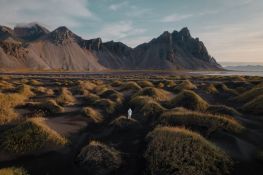
The icelandic highlands are the last true wilderness of Europe. A vast area ravaged by volcanoes and glaciers, carved out by glacial rivers and lava flows. Visiting Landmannalaugar is a step into this world, a super jeep tour taking you on a day trip through Fjallabak nature reserve feels like being an explorer of a new century or the star of your own science fiction epic. Just traveling the road leading to Landmannalaugar through the lava fields and then reaching the rhyolite mountains is a dreamlike experience. Whether you choose to bathe in the geothermal pools or use this as a starting point for a day hike or anything in between just reaching the area is an accomplishment in itself and worth a day tour.
-
Number of stars:Guest rating: 8.6У помешканні Center Hotels Laugavegur, яке розміщено у Рейк'явіку, до розпорядження гостей бар та ресторан. Для зручності гостей цілодобова стійка реєстрації, трансфер з/до аеропорту, обслуговування номерів та безкоштовний Wi-Fi на всій території помешкання. Номери мають зону для відпочинку, телевізор із плоским екраном із супутниковими каналами, сейф та окрему ванну кімнату з безкоштовними туалетно-косметичними засобами та феном. Усі номери устатковані чайником, певні номери відзначаються балконом, а з деяких номерів у свою чергу можна помилуватися красивим видом на місто. У помешканні Center Hotels Laugavegur номери обладнані постільною білизною та рушниками. Кожного ранку гостям помешкання подають такі варіанти сніданку: "шведський стіл", континентальний чи вегетаріанський.
Day8 Rekjavik
-
Breakfast
-
Check-out
-
Not sure what to do in this city? Here are a few tips: walk along the city's colorful streets, there is a lot of stunning graffiti on the walls of houses, so you will see modern artistic masterpieces while walking. The city has many unique and interesting museums worth visiting. The main promenade of the city is full of a variety of restaurants and shops, and the famous monument "Sun Traveler" is also located there. The most wonderful photos with it are taken in the evening when the sun goes down into the sea. Check it out for yourself!
-
Comfort package, from92 EURPremium package, from113 EURLuxury Package: SPA Retreat, from351 EURGroup transfer from Rekjavik and back51 EURPrivate transfer from Rekjavik and back for 1-6 people471 EUR
Iceland can offer its visitors not only the beauty of nature, but also its healing power. To experience it, we suggest visiting the Blue Lagoon, a unique geothermal spring in the middle of a black lava field, which is known not only for its milky blue mineral waters but also for its spa treatments. National Geographic rated it as one of the 25 Wonders of the World.
The cost is dynamic and depends on the time of entry to the spa complex and the number of available slots.
Comfort Package:
-- towel
-- wellness mask
--1 drink of your choicePremium package:
everything in the Comtort package
+ two additional wellness masks to choose from
+ bathrobe
+ a glass of sparkling wine during lunch at Lava restaurantSuite package (SPA Retreat):
everything in the Comtort package
+ Lagoon retreat
+ private room for changing clothes
+ additional rooms for relaxation
+ scrubs and creams
+ the option to order massages and treatments -
Private Transfer
-
Flight
- hotel
- restaurant
- directions_bus
- record_voice_over
- terrain
 (1) (1)-1152x768-263x175.jpg)
- hotel
- restaurant
- directions_bus
- directions_boat
- record_voice_over
- terrain
- hot_tub
- hotel
- restaurant
- directions_bus
- record_voice_over
- terrain